 Real Compliance
Understanding the 3 Levels of CMMC
 Real Compliance : Jun 30, 2026, 9:58:40 AM
CMMC 2.0 streamlines these requirements into three distinct levels. Here is the breakdown to help your OSC determine its compliance path.

Attackers are now more likely to break in through an unpatched system than a stolen password. This is the headline of Verizon's 2026 Data Breach Investigations Report (DBIR).
The report analyzed more than 31,000 real-world security incidents, including more than 22,000 data breaches across 145 countries.
The pattern it shows is clear. Vulnerability exploitation is the top way breaches start, at 31%, up from 20% a year ago. This means that breaches increasingly come through unpatched software, vendors with weak controls, and employees who get tricked.
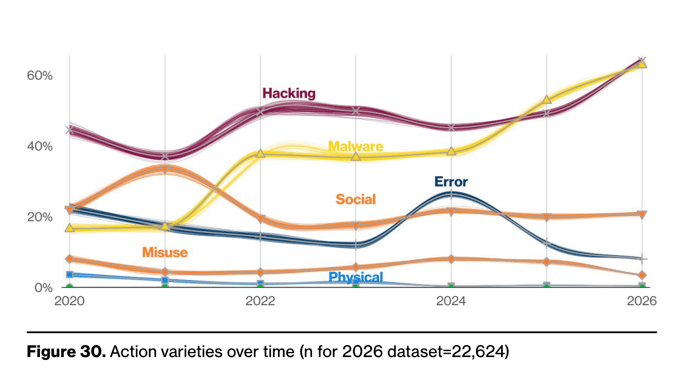
The good news for small to mid-sized businesses and defense contractors: most of these risks are fixable with disciplined, ongoing security operations. But it requires a proactive posture.
Exploitation, ransomware, and third-party risk all rose in 2026, while patching got slower.
(Figures below are from the 2026 DBIR; the data covers incidents from Nov 1, 2024 to Oct 31, 2025.)
Three things stand out:
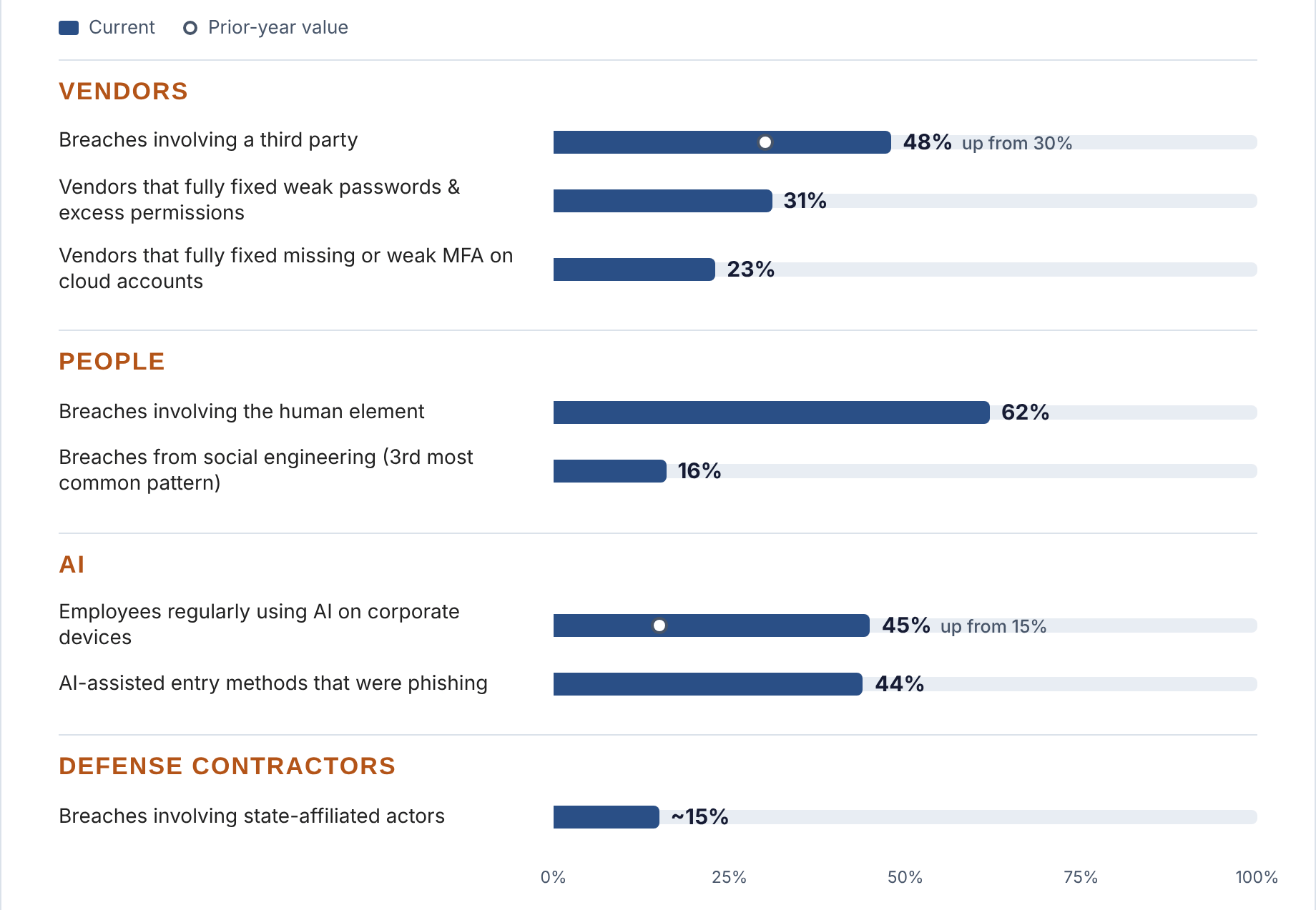
Your security is now only as strong as your weakest vendor. Third-party involvement in breaches rose 60% in a year, to 48% of all breaches. Vendors are also slow to close gaps: only 23% fully fixed missing or weak MFA on cloud accounts, and only 31% fully fixed weak passwords and excess permissions, a category that took almost eight months to address.
Employees remain a major factor in most breaches. The human element appeared in 62% of breaches, and social engineering was the third most common breach pattern at 16%. Attackers are also moving beyond email: click rates on voice and text-message lures run 40% higher than on email.
AI adds a new layer of exposure. Some 45% of employees now regularly use AI on corporate devices, authorized or not, up from 15%, and source code is the most common data pasted into outside AI tools.
On the attacker side, threat actors studied in the report sought AI help across a median of about 15 attack techniques, and phishing led AI-assisted entry methods at 44%. So far, AI mostly speeds up known attacks rather than inventing new ones: under 2.5% of techniques observed were rare.
Every major risk in the 2026 DBIR maps to a control businesses can implement.
For defense contractors, these controls do double duty. The practices that stop the attacks in the DBIR are the same ones CMMC Level 2 requires, so investing in protection also moves you toward certification.
For defense contractors, the stakes are higher. State-affiliated actors appeared in close to 15% of breaches, and espionage remains a motive alongside financial gain.
Use the DBIR as a quick gut check. If you can't answer yes to each item below, that's where to start.
Ready to close the gaps? Talk to MNS Group about a managed security program built around the threats in the 2026 DBIR, or about preparing for CMMC.
 Real Compliance : Jun 30, 2026, 9:58:40 AM
CMMC 2.0 streamlines these requirements into three distinct levels. Here is the breakdown to help your OSC determine its compliance path.
 Real Compliance : Oct 5, 2026, 3:11:14 PM
When a business searches for an MSP (Managed Service provider), it is common for price to become the primary factor in the decision. While pricing...
 Real Compliance : Apr 29, 2026, 10:19:56 AM
The world of defense contracting has undergone massive shifts. For years, Organizations Seeking Certification (OSCs) operated under self-attestation...